

Conscience Alley
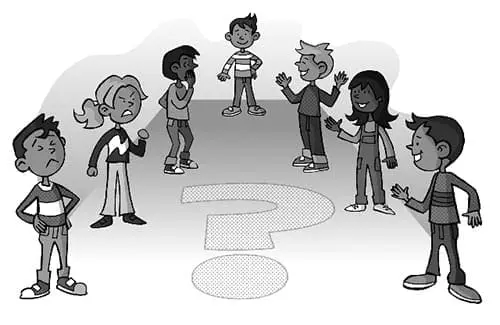
A character walks down an alleyway formed by members of the group as they use persuasive arguments to help make a decision.
Conscience Alley (also known as Decision Alley or Thought Tunnel) is useful for exploring any dilemma faced by a character, providing an opportunity to analyse a decisive moment in greater detail. Participants form two lines facing each other. One person takes the role of the character making the decision and walks between the lines, as each person speaks (or whispers) their advice. When the character reaches the end of the alley, they make their decision.
Teaching Tips
- Students on each side can be asked to give opposing advice.
- Younger or less confident participants can walk down the alley in pairs.
- Those giving advice can also take on roles, such as characters from a book.
- Use prompts, such as ‘You should…’ or ‘If I were you I would…’
- Alternatively, the persuaders can voice the character’s thoughts: e.g. ‘I should apologise…’ or ‘I should speak my opinion proudly’.
The 3-minute video shows the technique in animated form.
Get more advice, lesson plans and ideas about using Conscience Alley in Learning Through Drama in the Primary Years and Drop of a Hat Drama Lessons by David Farmer.


3D Living Pictures

Action Clip

Conscience Alley

Cross-Cutting

Developing Freeze Frames

Drama For Writing

Flashbacks and Flash Forwards

Forum Theatre

Freeze Frames

Hot Seating

Hot Spotting

Image Theatre

Mantle of the Expert

Marking the Moment


Role on the Wall


Soundscapes


Storytelling

Teacher in Role

Thought Tracking

Whoosh! Bringing Stories Alive through Drama

3D Living Pictures

Action Clip

Conscience Alley

Cross-Cutting

Developing Freeze Frames

Drama For Writing

Flashbacks and Flash Forwards

Forum Theatre

Freeze Frames

Hot Seating

Hot Spotting

Image Theatre

Mantle of the Expert

Marking the Moment


Role on the Wall


Soundscapes


Storytelling

Teacher in Role

Thought Tracking

